Canvas, Wood Panel, or Paper? Comparing Painting Surfaces for Budding Artists
You've got the paints, a jar of water, and a brush that seemed like a good idea at the time. Now you're standing in front of a rack of surfaces, wondering why one canvas costs more than another and whether the paper you already own will do the job. It will — sometimes. The surface you choose changes how the paint moves, how much handling the finished piece survives, and how far your budget stretches before you've mixed a single color.
Canvas: Familiar, Forgiving, and Not All Alike
Canvas is what most people picture when they picture a painting. Stretched over wooden bars, it has a slight give: press down and the brush bounces back. That springiness suits loose, gestural brushwork, and the woven texture shows through thin paint in a way many painters like. It's also forgiving of small mistakes. A wobbling line is easier to disguise on a textured surface than on a glass-smooth one.
Cotton is the sensible choice while you're learning. Linen is stronger and holds its tension better over decades, but it costs considerably more and is hard to justify before you know what you like. Look for pre-primed canvas that feels taut and doesn't ripple when you tap it. Gallery-wrapped canvas has staples on the back and neat folded corners, so it can hang unframed; standard wrapped canvas has staples on the sides, which usually means framing. Expect some sag over time, especially in a damp room. Wooden wedges tapped into the corners of better stretcher bars will tighten the surface again.
Canvas boards and pads
Canvas board is fabric glued to a stiff board. It's cheap, light, and perfect for studies, though heavy layers of wet paint can warp it, particularly at larger sizes. Canvas pads are simply sheets of primed canvas you tape to a board or clip into a sketchbook. Both are ideal for practice and for working out a composition before committing to something better.
Wood Panel: Rigid, Smooth, and Beginner-Friendly
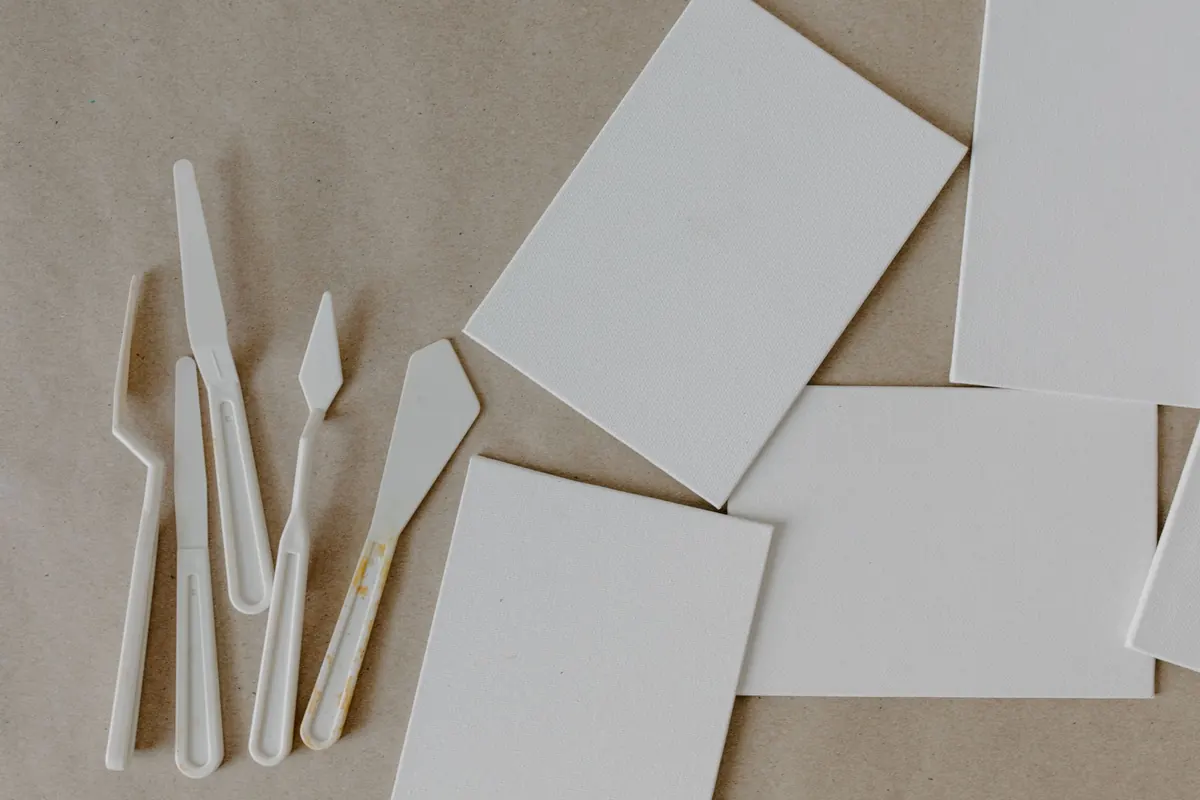
A panel doesn't move. Nothing bounces, nothing sags, and every edge you paint lands exactly where you put it. Some painters find that stiff and unforgiving; others find it the easiest surface they've ever used. It shines for portraits, small still lifes, crisp lines, palette-knife work, and mixed media with collage or gold leaf.
You'll find birch plywood, hardboard, MDF, and pre-gessoed panels sold ready to paint. Raw wood drinks paint and can warp, so seal it first with several thin coats of gesso — front, back, and edges. If you're working in oils, priming matters even more, because oil on bare wood or bare paper soaks in and damages the support over time. MDF is dense and heavy, so keep panels small to medium while you're starting out and think about how a large one will hang.
Paper: The Cheapest Way to Improve Fast
Nothing beats paper for volume. You can make ten studies on paper for roughly what one stretched canvas costs, and ten studies will teach you more than one precious painting. Weight is the number that matters: light drawing paper buckles the moment it meets water, 140 lb (around 300 gsm) watercolor paper holds up reasonably well, and 300 lb stock stays flat with almost no prep.
Match the paper to the paint
- Watercolor — watercolor paper only, ideally cotton. Cold press has a gentle texture and is the usual starting point; hot press is smooth and good for fine detail; rough is heavily textured and loves dry brush.
- Acrylic — heavy watercolor paper or acrylic paper works well. Tape it down first, and a thin coat of gesso stops the paint soaking in.
- Oil — seal the paper with acrylic gesso, or buy oil-primed paper. Never paint oils straight onto drawing paper.
- Gouache, ink, pastel — drawing or mixed-media paper handles all three.
To stop a thin sheet buckling, soak it briefly, lay it on a board, and staple or tape the edges before it dries. As it dries, it pulls tight like a drum.
The Short Version
- Stretched canvas: moderate cost, visible texture, springy, no prep if pre-primed. Best for finished acrylic and oil work, especially larger and looser.
- Canvas board or pad: cheapest of the fabrics, light, prone to warping. Best for studies and outdoor sketching.
- Wood panel: higher cost for good panels, smooth to slightly toothy, rigid, durable. Needs sealing. Best for detail, small finished pieces, mixed media.
- Paper: cheapest, huge range of textures, fragile unless framed under glass. Best for watercolor and anything you'll frame behind glass.
Prep: The Step Beginners Skip
Gesso is not decoration. Two or three thin coats, brushed in alternating directions and left to dry between layers, give paint something to grip. Sand lightly between coats with fine paper and wipe off the dust. One thick coat dries uneven
Photo: Tara Winstead / Pexels